The largest machine in the world...
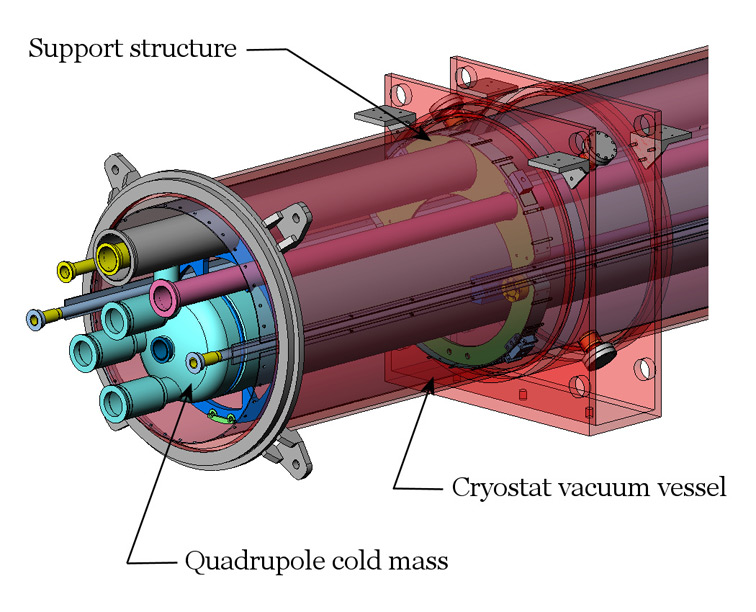
The precise circumference of the LHC accelerator is 26 659 m, with a total of 9300 magnets inside. Not only is the LHC the world’s largest particle accelerator, just one-eighth of its cryogenic distribution system would qualify as the world’s largest fridge. All the magnets will be pre‑cooled to -193.2°C (80 K) using 10 080 tonnes of liquid nitrogen, before they are filled with nearly 60 tonnes of liquid helium to bring them down to -271.3°C (1.9 K).
The fastest racetrack on the planet...
At full power, trillions of protons will race around the LHC accelerator ring 11 245 times a second, traveling at 99.99% the speed of light. Two beams of protons will each travel at a maximum energy of 7 TeV (tera-electronvolt), corresponding to head-to-head collisions of 14 TeV. Altogether some 600 million collisions will take place every second.
The hottest spots in the galaxy, but even colder than outer space...
The LHC is a machine of extreme hot and cold. When two beams of protons collide, they will generate temperatures more than 100 000 times hotter than the heart of the Sun, concentrated within a minuscule space. By contrast, the 'cryogenic distribution system', which circulates super fluid helium around the accelerator ring, keeps the LHC at a super cool temperature of -271.3°C (1.9 K) – even colder than outer space!
The most powerful supercomputer system in the world...
The data recorded by each of the big experiments at the LHC will fill around 100 000 dual layer DVDs every year. To allow the thousands of scientists scattered around the globe to collaborate on the analysis over the next 15 years (the estimated lifetime of the LHC), tens of thousands of computers located around the world are being harnessed in a distributed computing network called the Grid.

No comments:
Post a Comment